
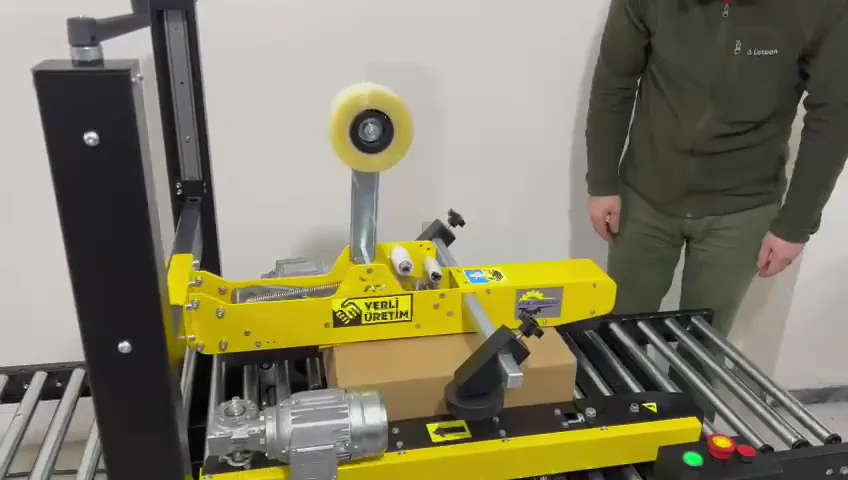
M84 real operation footageBD50-K · fixed 30 mm tape tail
We design and build semi-automatic and fully automatic case sealers, plus the conveyors that feed them, at our own workshop in Ümraniye, İstanbul, with the spare parts stocked under the same roof.
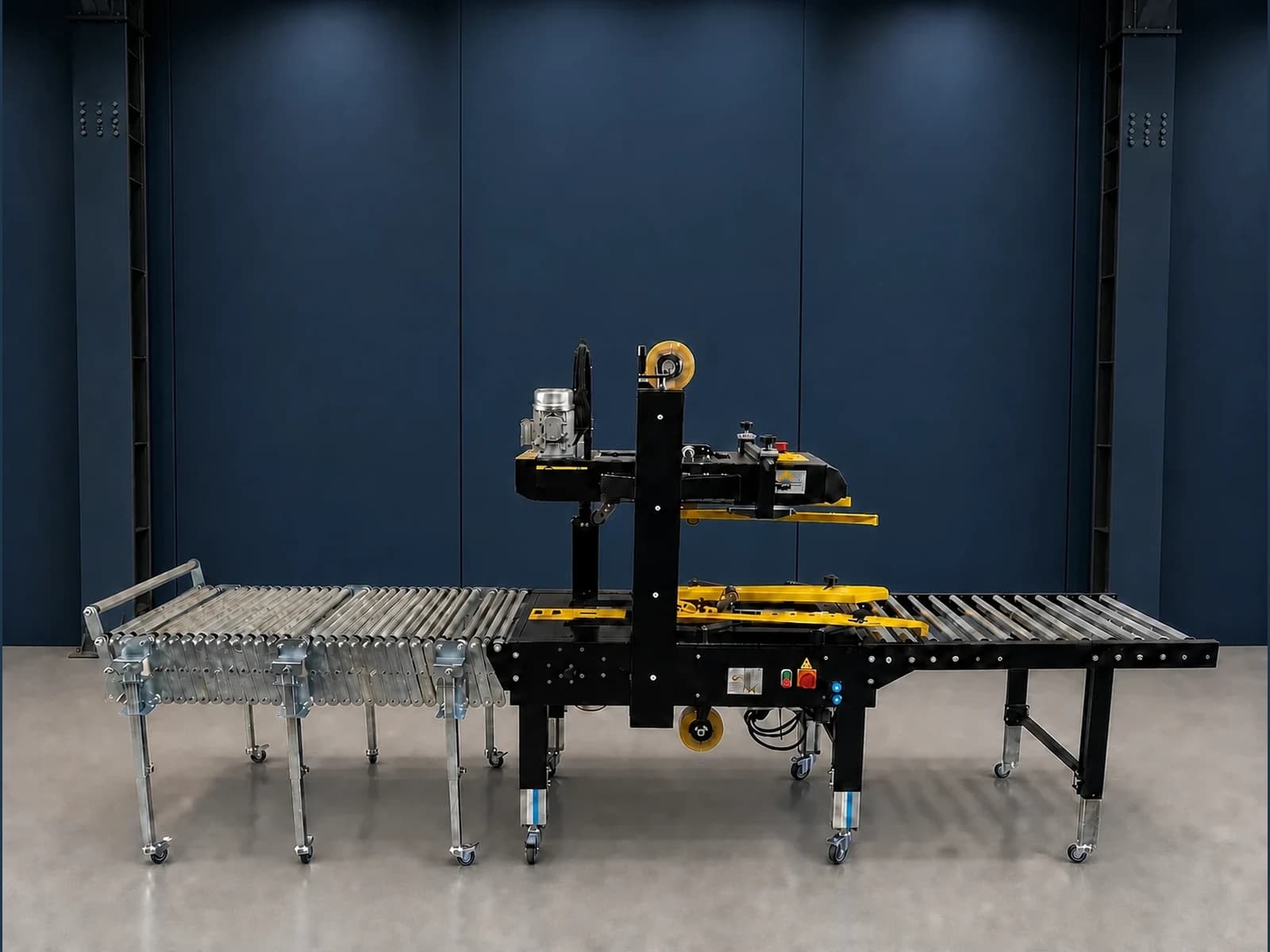
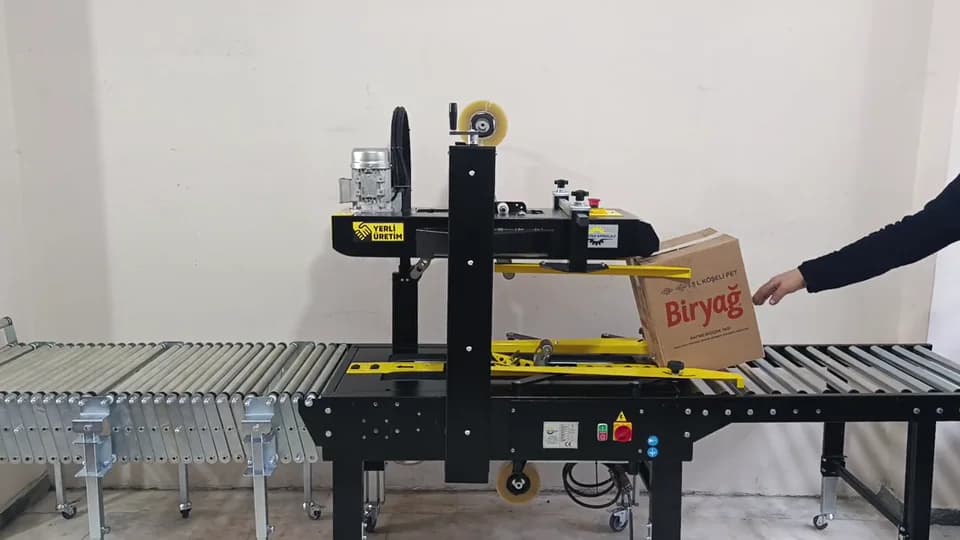
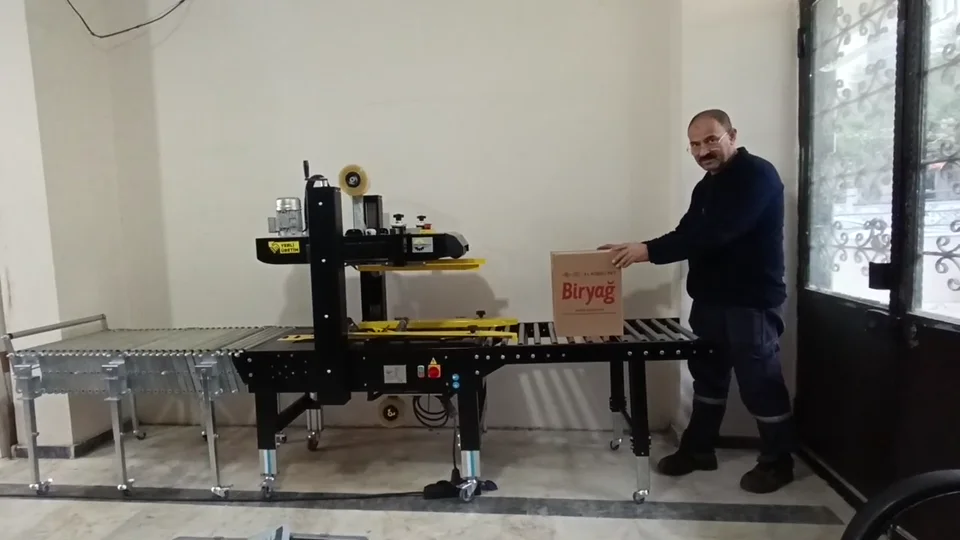
Real production-line and pre-dispatch test footage: carton feeding, belt drive, flap folding and top/bottom sealing can be seen directly.
From semi-automatic to fully automatic, plus roller and telescopic conveyors. Every model comes with its technical file and spare-part list.
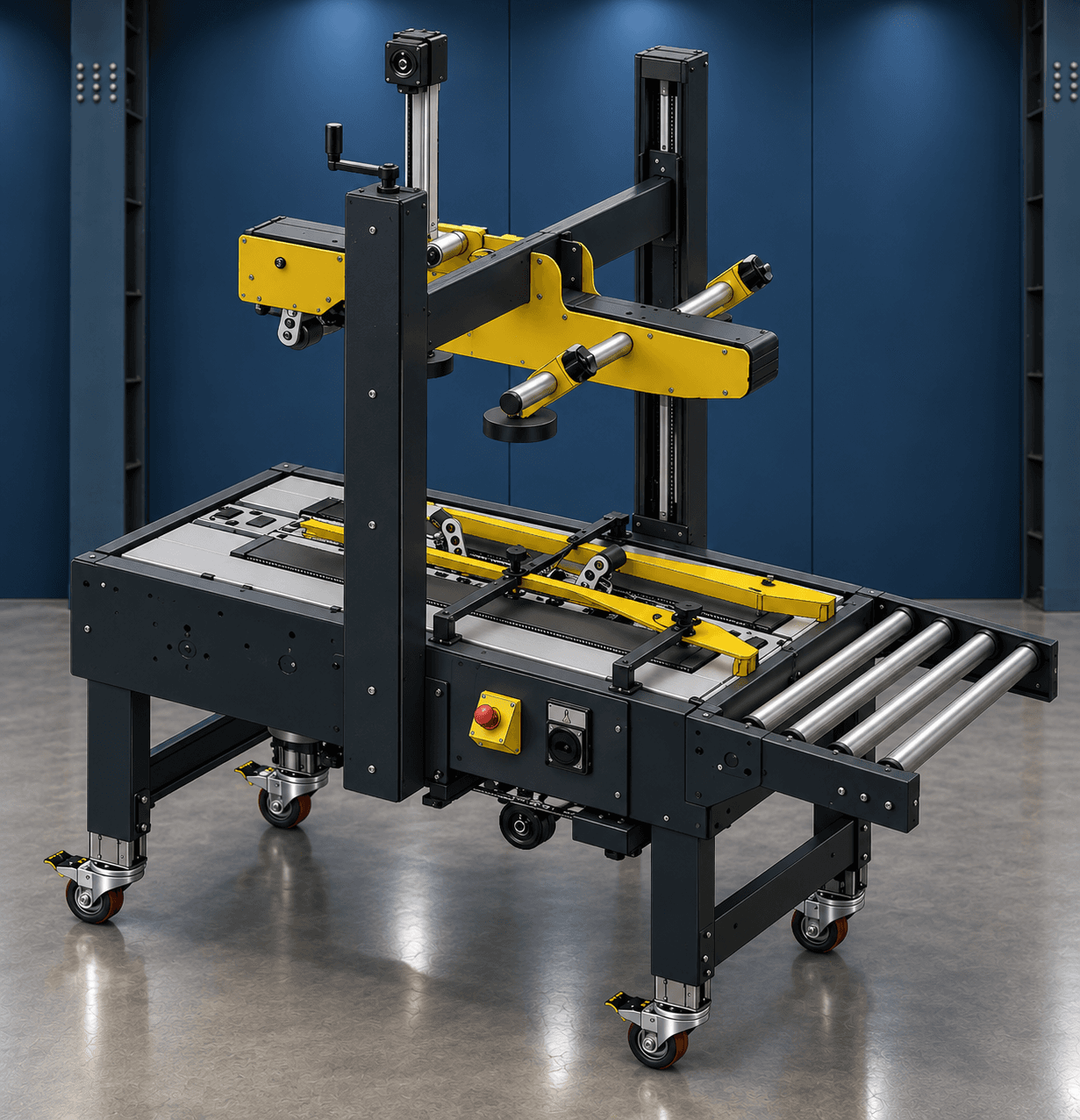
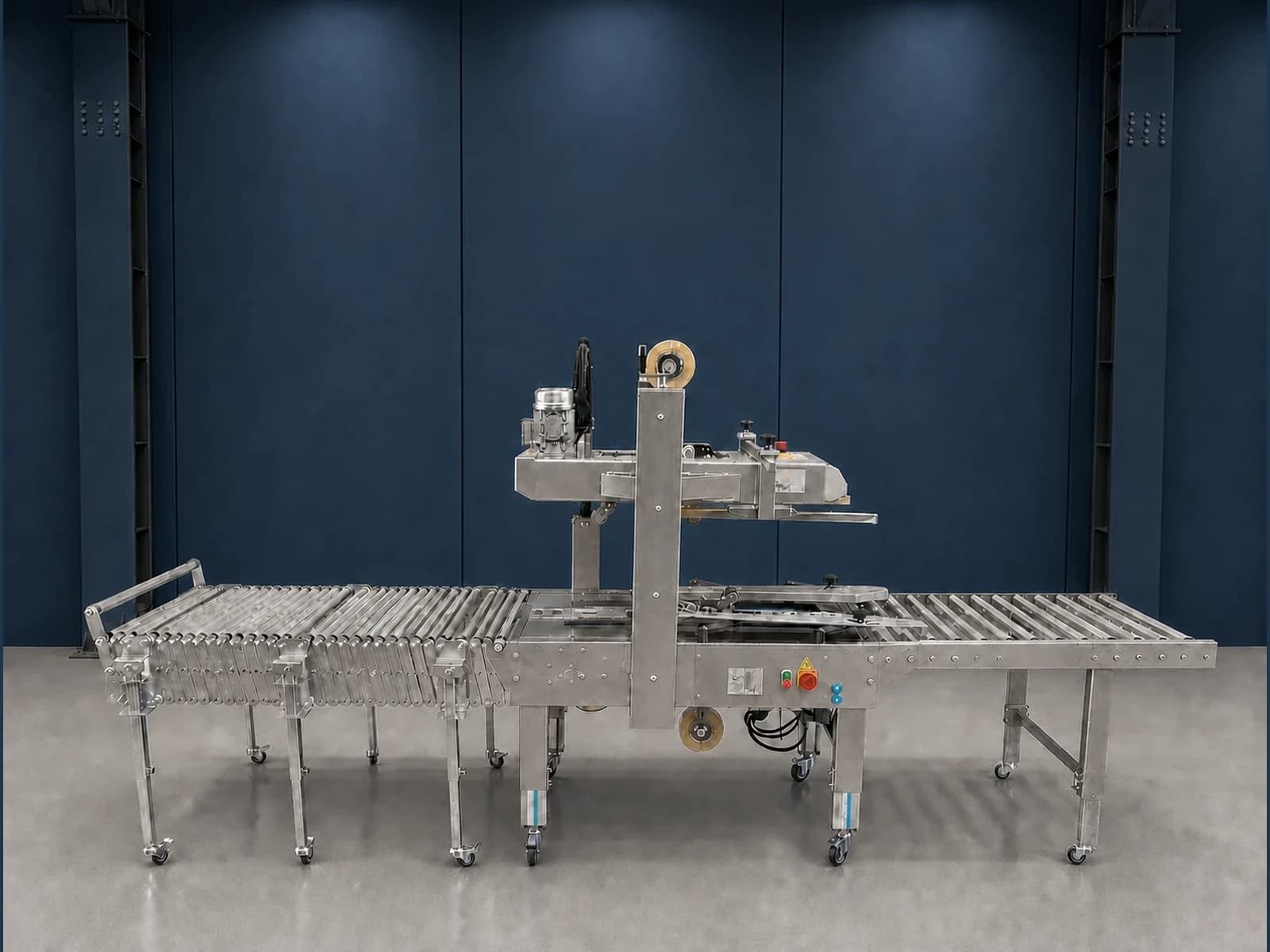
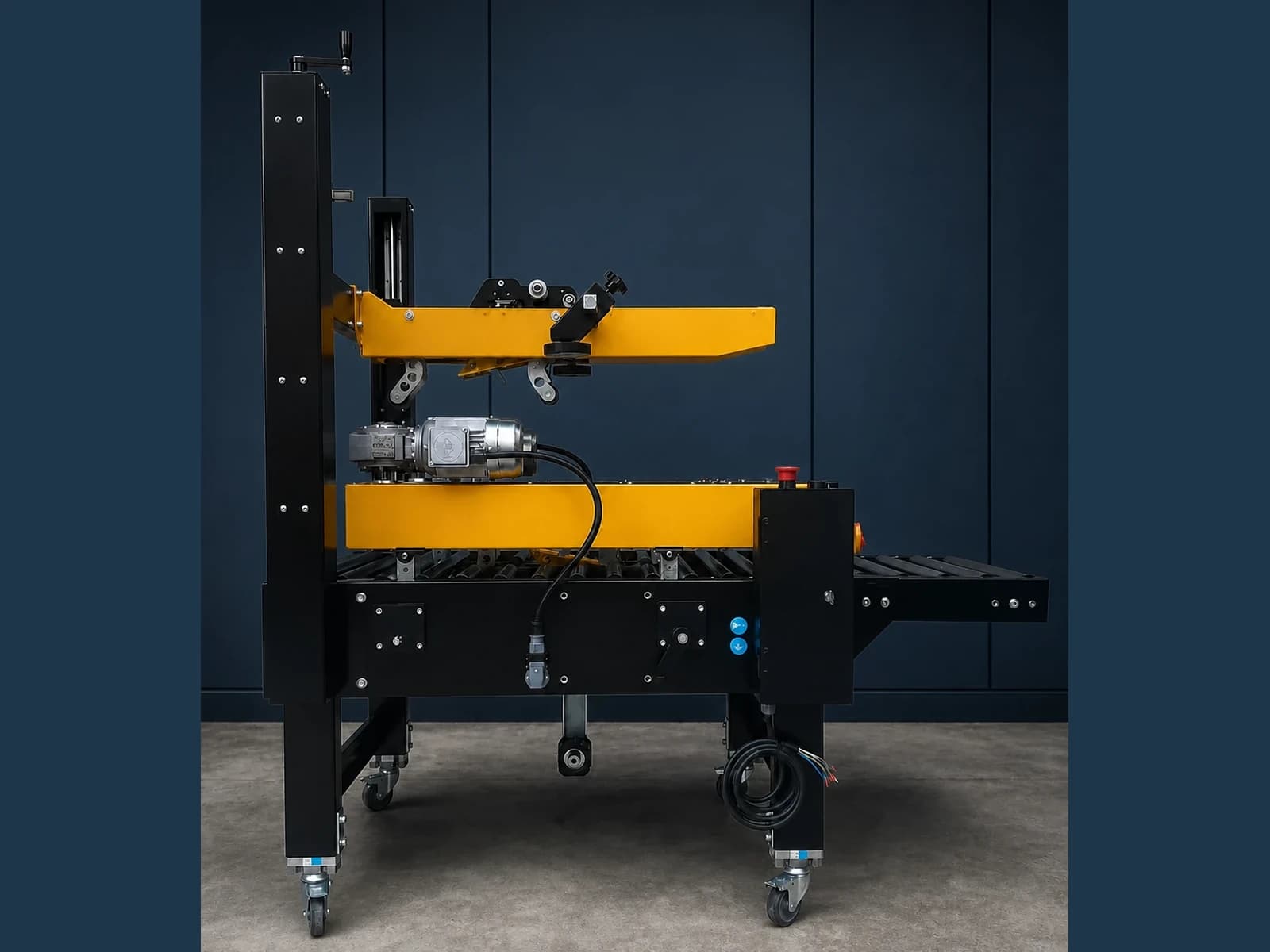
Design, sheet-metal work, assembly and final testing are handled by the same manufacturing team. Technical service and spare-part support continue after delivery.
The team that builds the machine also services it. You explain the fault once and the part is replaced the same week.
At commissioning we walk your operators through settings, tape-tail changeover and daily maintenance, hands on.
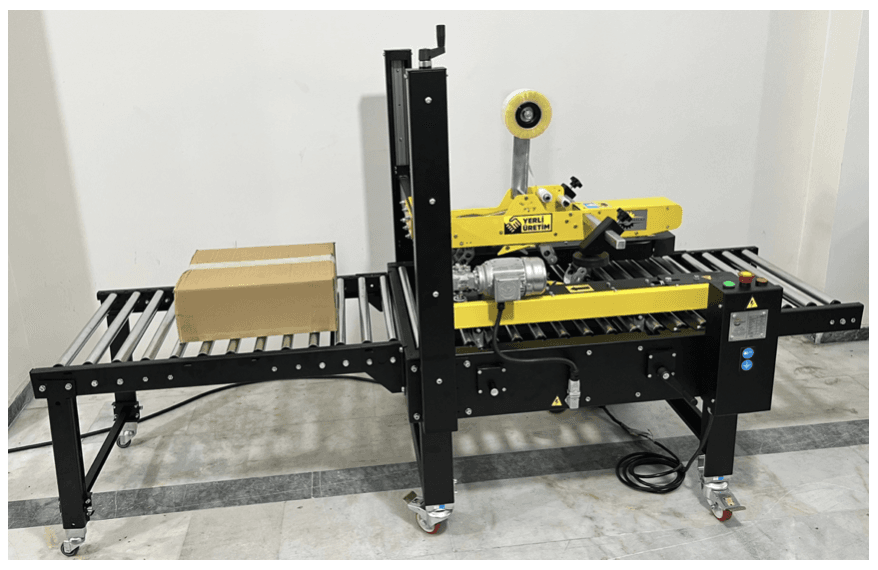
From cutting and assembly to testing and installation, the whole process runs at our Ümraniye facility.
Width, length, height and daily volume are enough. If needed we run a test with your own sample carton at our facility.
Taping cartons by hand works while the volume stays low. Past that, the result starts depending on who is doing it: tape runs long on one box, misses the corner on the next, and a finished pallet looks uneven. A case sealing machine takes that variation out. As the carton travels through the taping unit, the same length of tape goes onto the top and bottom seams, gets cut, and is pressed down by rollers. The last carton of a shift looks like the first, and tape consumption becomes something you can budget for.
Carton range is model-specific. The verified M20 range is L ≥150 × W 140–500 × H 110–500 mm; other models are confirmed against the sample carton in the written quotation.
The answer has more to do with your line than with the machines. On a semi-automatic carton sealer the operator folds the top flaps and pushes the box in, and the taping is automatic. Where one person both packs and closes the box, that arrangement is usually enough. The machine stands on its own, needs little floor space, and is the smaller investment. The semi-automatic family includes several drive arrangements for different carton flows.
A fully automatic machine folds the flaps too, so the operator only feeds the carton onto the line. Its capacity is configured around the model, carton and line equipment and earns its place where volume is high and the carton size does not change every hour. The useful test: with the same number of people on the floor, is your daily carton count still climbing? If it is, the queue is probably forming at the sealing station.
The taping unit pulls, cuts and presses the tape, and it is the part of the machine that genuinely wears. We supply it in two widths. The standard BD50 head takes 38–50 mm tape and covers most cartons. The BD75 head runs 50–75 mm tape and suits heavy or deep boxes, where the seam takes more strain. Choose around the tape you already buy, otherwise the machine quietly changes your consumables stock as well.
A sealer works well on its own, but the carton still has to reach it and then go somewhere. An idler roller conveyor is the plain answer: no motor, the box moves on a slight fall or a push, and there is next to nothing to maintain. A scissor-type telescopic conveyor extends and retracts instead, reaching out to the vehicle at loading and folding away once the truck leaves. When the conveyor is planned together with the sealer, the deck heights line up from the start. When the two are sourced separately, those heights do not always match.
Carton dimensions, daily volume, and how the line is laid out today. The dimensions decide the series, the volume draws the line between semi-automatic and fully automatic, and the layout tells us whether a conveyor is needed and which type fits. The number of different carton sizes matters too: a line running one fixed size and a line switching size several times a day do not want the same machine.
We do not publish a price list, because the same model becomes a different build once tape width and conveyor needs are settled. Send your carton size and daily quantity and a written quote goes out the same day; installation, setup and operator training come with it. You can look through the full range, download the catalogue for technical detail, or write to us directly. There is more about how the workshop runs on our company page.